
Spots on Dishes or Scale Buildup? Here's Why
Southern California, including Carson, generally has moderately hard water, meaning higher mineral content, mostly calcium and magnesium, than many other parts of the country. That mineral content is what causes white spots on dishes and glassware, a filmy residue on shower doors, and gradual scale buildup inside water heaters, faucets, and appliances.
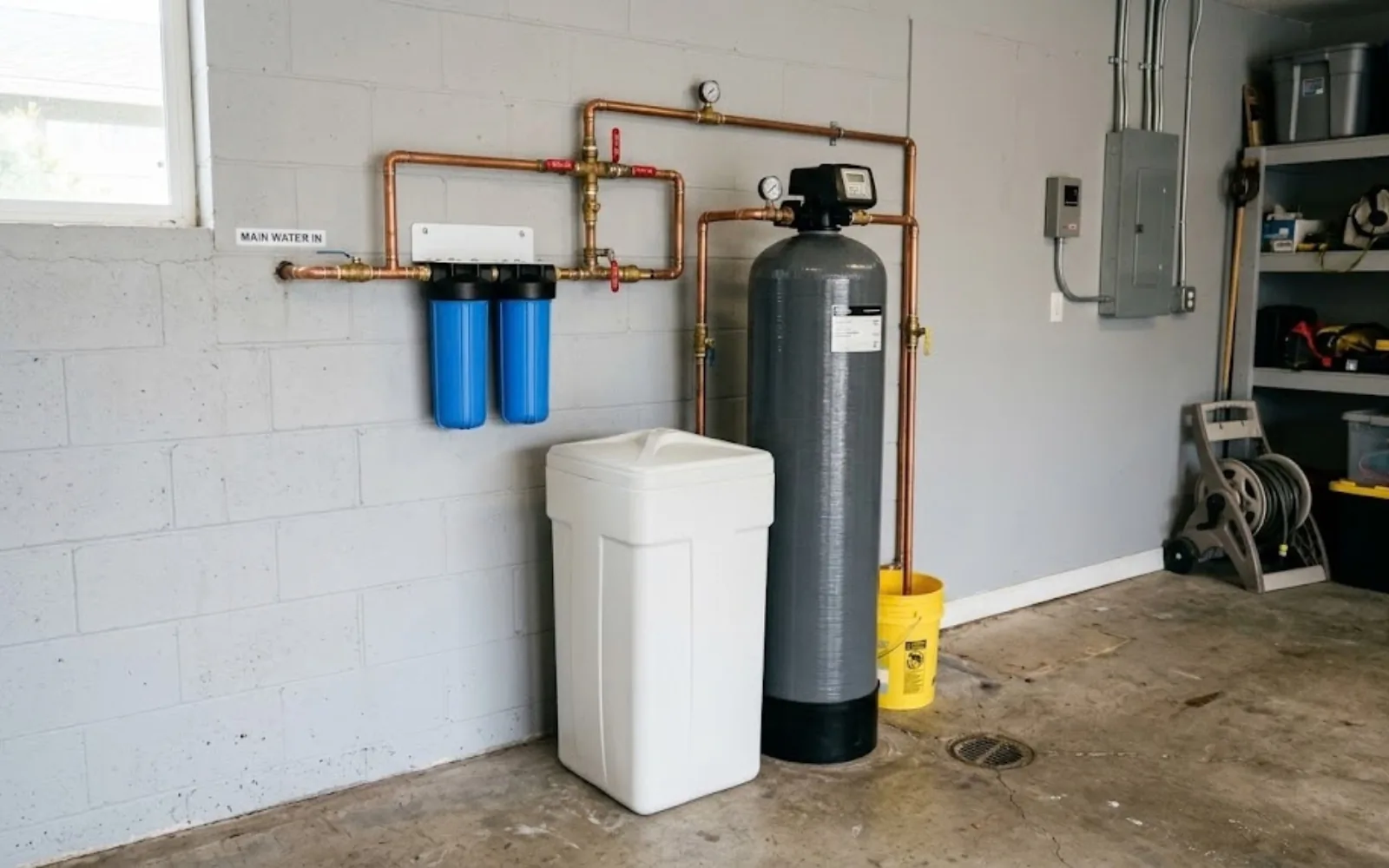
A water softener addresses hardness specifically by removing the minerals that cause scale, while a filtration system addresses taste, odor, and contaminants but doesn't necessarily soften the water. Many households benefit from both, and we'll walk through which combination actually solves the specific problem you're noticing rather than defaulting to the most expensive option.
Signs Hard Water Is Affecting Your Home
Spots on Dishes and Glassware
White mineral spots that remain even after washing are a classic hard water sign.
Filmy Residue in the Shower
A film on shower doors and tile that's hard to scrub off usually comes from mineral buildup.
Dingy or Stiff Laundry
Hard water can leave clothes feeling stiff and looking duller over time, even with regular washing.
Appliances Wearing Out Faster
Water heaters and dishwashers accumulate scale internally, reducing efficiency and lifespan.
Water Quality in Carson
Carson draws its water through the regional supply serving much of the South Bay, and like most of this part of Los Angeles County, it runs moderately hard. That's not a safety concern, hard water is safe to drink and use, but it does have real practical effects on appliance lifespan, cleaning effectiveness, and skin and hair for some households.
A whole-home water softener treats water as it enters the house, addressing hardness for every fixture and appliance rather than just one point of use. Installation typically ties into the main water line near where it enters the home, and sizing depends on household size and actual water hardness, which we test on-site rather than assuming a generic regional average.
Filtration systems, whether a whole-home unit or a simpler under-sink system for drinking water specifically, address different concerns, chlorine taste, sediment, or specific contaminants, and can be installed alongside a softener for households wanting both improved water quality and reduced hardness.
Carson shares the hard water common to the South Bay, so households near Carriage Crest Park and Dominguez Park often notice spotting on dishes and scale on fixtures before any appliance fails. We test the water at your tap first so the system we recommend fits your actual hardness.
Our Installation Process
Test Water Hardness
On-site testing rather than assuming a generic regional number.
Recommend the Right System
Softener, filtration, or both, based on what you're actually trying to solve.
Install at the Main Line
Whole-home systems tied in near where water enters the house.
Confirm Performance
Testing after installation to confirm hardness and flow are as expected.
Why Choose Us for Water Treatment
On-Site Water Testing
We test your actual water rather than guessing based on regional averages.
Softener and Filtration Both
We install and service both types and can combine them where it makes sense.
Proper Sizing
Systems sized to actual household water use, not a one-size-fits-all unit.
Free Estimates
A clear recommendation and price before you commit to a system.
Softener Service and Brine Tank Problems
If an existing softener runs out of capacity quickly, leaves hardness in the water or leaks around the valve head, it may need service rather than replacement. A salt bridge in the brine tank is another common cause of a softener that stops working.
We inspect the valve, the brine tank and the resin before recommending service or a new system, and you hear the price before we start.
What Affects the Price of Water Softener & Filtration Installation
We can't give an accurate number without seeing the job, but these are the real factors that move the price up or down.
Softener only vs. combined system
Adding filtration alongside a softener costs more than a softener alone, but addresses different water quality concerns.
Household size and water use
Sizing the system to actual household demand affects both the unit chosen and its cost.
Installation complexity
Tying into the main line is more involved in some homes than others depending on existing plumbing layout.
Water Softener vs. Filtration System
| Factor | Softener | Filtration |
|---|---|---|
| What it addresses | Hardness (calcium and magnesium) | Taste, odor, chlorine, sediment, specific contaminants |
| Mechanism | Ion exchange removes hardness minerals | Physical or carbon filtration removes particles and chemicals |
| Fixes scale buildup | Yes | No, not on its own |
| Best fit | Households seeing spotting, film, or appliance scale | Households concerned with drinking water taste or quality |
Water Softener Installation Questions
Yes, like most of the South Bay and greater Los Angeles area, Carson's water supply runs moderately hard, meaning higher mineral content that can cause scale buildup and spotting over time.
A softener removes minerals that cause hardness. A filtration system addresses taste, odor, chlorine, or specific contaminants, but doesn't necessarily reduce hardness. Many households benefit from both.
Most whole-home softener or filtration installations are completed in a few hours, depending on your home's existing plumbing layout.
Yes, reducing mineral content significantly slows the scale buildup that shortens the lifespan of both tank and tankless water heaters.